

Key Learning Points for Retailers on Tackling Fresh Meat Losses
Editor’s update (May 2026): Retailers continue to report fresh meat as one of their highest-risk categories for unknown loss. We’re revisiting this topic in our latest working group meeting on 11 June 2026.
When it comes to reducing fresh meat losses in retail, retailers face significant challenges – with theft, waste, and operational inefficiencies being the primary concerns. In our most recent ECR Retail Loss working group meeting, retailers in the meeting highlighted current best practices and future plans to address these issues effectively.
What’s Working Now When it comes to Reducing Fresh Meat Losses in Retail?
Retailers have trialled and implemented various strategies to reduce losses in fresh meat, focusing on deterrence, operational efficiency, and balancing sales with security.
New for 2026: Fresh meat losses, latest thinking
The challenge of fresh meat losses hasn’t gone away.
With some retailers continuing to report that fresh meat and protein account for more than a third of all unknown losses, our working group is reconvening on 11 June 2026 to share the latest thinking, interventions and lessons learned.
Expect retailer updates on loss trends, root cause analysis, source tagging, smart shelves, video analytics, self-checkout controls, product protection and emerging approaches to tackling theft for resale.
This year’s discussion is designed as a retailer roundtable, with participants sharing what is working, what isn’t, and where they are focusing next.
Join the discussion and hear the latest retailer thinking.
Physical Deterrents
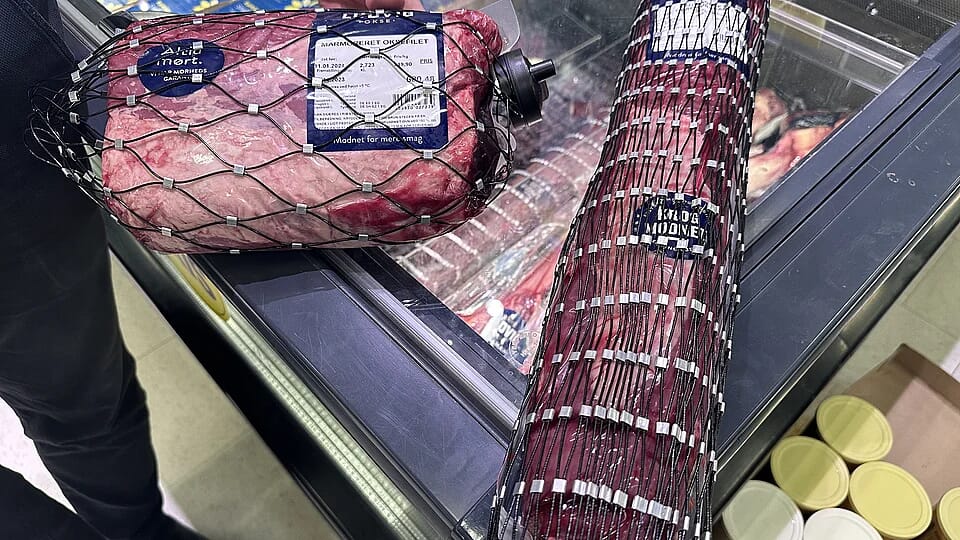
Pushers and Shelf Modifications: One of the retailers reported a successful trial of pushers in 350 stores, showing improvements in sales, waste reduction, and loss prevention by slowing down theft attempts. Security Tags and Nets: Other retailers had explored net-based solutions, while another developed a specialised tag for leg joints with clear cabling, which reduced losses by 40%. However, another found that the labour cost of applying nets (22 seconds per tag) outweighed any shrink reduction. Safer Boxes: Several retailers used protective cases, but their effectiveness has waned as shoplifters have adapted.
Technology & Surveillance
Weighted Shelves & Smart Cameras: Two retailers shared that they had tested and / deployed smart detection cameras and weighted shelves to identify theft in real time. Public Display Monitors (PDMs): One retailer saw a 41 basis point reduction in shrinkage where these were installed above meat sections. AI-based Theft Detection at Self-Checkouts: Some retailers, have been exploring AI-assisted self-checkout monitoring to reduce theft at point-of-sale, with meat being a category that is often not being scanned by the shopper, either by mistake or deliberately.
Tagging Strategies: Soft Tagging at Source
Most retailers have embedded security tags at the manufacturing level to improve compliance and efficiency. High-Visibility Stickers: One retailer transitioned to bright yellow and black soft tags for a stronger visual deterrent, which led to increased awareness among staff and customers.
Operational Adjustments. Repositioning Meat Sections: Some retailers relocated meat sections to more visible areas or near checkouts to reduce theft. Product Range Optimization: One retailer reduced high-risk meat SKUs in convenience stores where losses exceeded sales. Improved Packaging: One retailer shared that they had enhanced packaging to prevent damage in transit, minimizing unrecorded losses.
Future Plans & Innovations to reduce fresh meat losses in retail
Retailers are looking at innovative approaches to enhance loss prevention strategies without negatively impacting sales or increasing labour costs significantly.
Exploring Alternative Packaging
One retailer plans to introduce boxed lamb legs, similar to its premium beef joints, with security tags inside. However, another retailer found that boxed meat led to increased shrinkage, likely due to a more premium perception. Many retailers remained cautious about boxed packaging due to space constraints and potential impact on customer purchasing behaviour.
Advanced Security Solutions
AI & Smart Shelf Technology: Several retailers are expanding the use of AI-driven theft detection. EAS Deactivation at Checkout: Another retailer is rolling out security stickers that can be deactivated at self-checkouts to improve compliance.
Localized Strategies
High-Loss Store-Specific Approaches: To combat the problem, several retailers are focusing their efforts just on the high-risk stores rather than applying blanket measures across the entire business.
Collaborations & Industry Sharing: Engagement with Suppliers
Many retailers are working closely with suppliers to introduce security measures at the production stage. Industry Working Groups: Companies are increasingly participating in forums such as this one, to share insights and benchmark strategies.
Conclusion
Retailers continue to refine their loss prevention strategies for fresh meat by leveraging physical deterrents, technology, operational improvements, and smarter packaging. While measures like pushers, tagging, and AI theft detection have shown promising results, balancing these with customer convenience and sales growth remains a challenge. The future focus will likely be on data-driven, store-specific approaches and further integration of technology to tackle meat losses efficiently.




