

Food Waste Reduction Planning – Six Key Questions for Retailers
Retail food waste reduction starts with the right questions. Over 200 participants representing more than 40 grocery retailers joined six working group meetings over two days, exploring expiry date visibility, the true cost of food waste, innovative food surplus exit strategies, self-service markdowns, dry misting and innovations in bakery waste.
Out of those discussions, and the case studies shared, emerged six questions that retailers might like to reflect upon as they build their next food waste reduction plan. The answers will not all be a simple “yes”. But based on the participants’ responses, it would be hard to conclude that the answer to the first question should be anything but a yes.
1. Should we assess the potential of the 2D data matrix barcode?
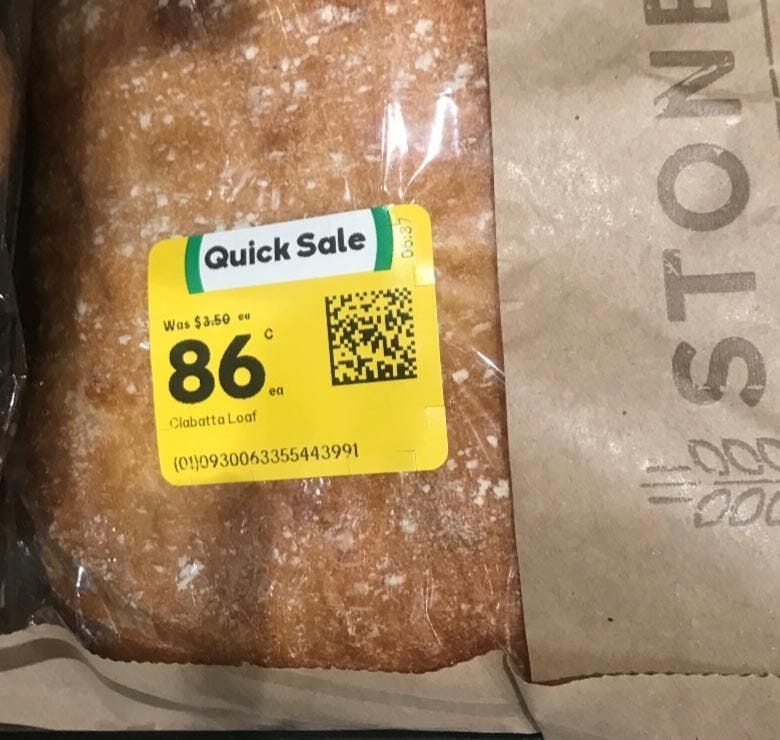
The group heard from leaders at Woolworths Australia, updating progress since their recent presentation, on the early and impressive results from their deployment of 2D data barcodes in the protein category. Three themes ran through the discussion.
The first was the scanning process: what does it take to upgrade retailer POS systems, and will the new barcode slow down the customer at checkout? The second was supplier capability and cost: 2D barcodes are harder to print, and questions remain about the true cost of upgrading in-line printers to apply them. Can it be done at zero cost? The third was implementation: there are so many use cases to chase that choosing where to start matters, and the full benefits arrive only once the industry has fully adopted the codes.
For a deeper look at how the technology is being used in store, see our research on embedded date codes in retail.
2. Should we analyse what food waste is truly costing our business?
Decades ago, managing food waste was easy: you chucked everything out of date in the dumpster. Today, exiting food surplus in a responsible way is a priority for every retailer, and there are real costs attached to every route out: lost profits on markdowns, the cost of building apps and software to manage markdowns and donations, consumables such as recycling bags, transport costs to other destinations, and the store associate and management hours to oversee the whole process. That list excludes the sanctions that follow if any of those processes break down.
In this session, Professor Lisa Jack shared a true cost of food waste model with the group, populated with data from the participating retailers to reveal the extent of these costs, illustrated using fish as the example category. The next step is to populate the model with additional retailer data and then publish a report and the model itself.
The benefits identified by the participants were three-fold. The model creates visibility on the full cost of wrong forecasting, over-expansive assortments and shipping too-large case sizes. By knowing the costs by exit route, businesses can prioritise lower-cost routes and save money. And with the full costs exposed, they can be added into business cases that require new investments in people, resources or technology.
This connects directly to ECR’s wider work on food surplus management in retailing.
3. Can we be more imaginative and accelerate the pace of innovation?
With over 60 retailers regularly participating in the ECR working group, the group regularly hears updates on breakthrough food waste innovations: repurposing at Sonae, community donations at Tesco, dynamic pricing at Nemlig. At this meeting, Iceland shared their holistic approach to exiting food surplus, including a policy of offering free products to online customers when the expiry date is on the day of delivery.
As the group learnt, Iceland is not the only retailer offering near-expiry items free to the customer. One retailer described sending flowers on their last day to online customers. While there was healthy debate over whether this approach is right for every retailer and every store, the group agreed there is a real gap in good innovation around exiting surplus food from dark stores and fulfilment centres. The Iceland free-product idea could be a strong fit for that context.
4. Have we thought about asking shoppers to mark down close-to-expiry products themselves?
In grocery stores, it is not uncommon to find more than 75% of customers scanning their own goods and paying at self-checkout. So what comes next, and why not expiry-date-based price discounts applied by the shopper?
In this session, Sebastian from ICA shared his learnings from a system introduced in June 2021. With heavy in-store marketing, he believes the model can expand, adding theatre to the shopping experience while saving store associate labour hours.
Concerns raised by the group centred on possible misuse and abuse of the discounts. Others pointed out that some of those same risks, and more, are already present at self-checkout. The bigger concern was that this approach does not remove the manual check for expiry dates, it just reduces the number of items to check and mark down. Is that worth the effort?
5. Should we revisit dry misting?
The technology has been available for decades but, with a few exceptions, has never scaled across any one retailer or country. Is that about to change? And is the time now right to support a business case built around a better shopping experience in produce, less reliance on plastic packaging, and lower food waste?
For Albert Heijn, the answer was a clear yes. Their dry misting leadership team shared estate-wide deployment results with the group, including a 44% reduction in waste on bananas. Most of the group had started the meeting expecting dry misting not to be especially interesting. As one retailer put it after seeing the case study, if this really is a way to improve the shopping experience, reduce plastic and reduce food waste, what is there not to like?
6. Is this the year we take a fresh look at bakery waste?
For most grocery retailers, bakery accounts for 35-40% of all food wasted in store. In this session the group heard a case study from Meny, where bread waste was reduced by 34% while sales also grew, and from Albert Heijn on their “bread of yesterday” programme.
For retailers looking to refresh their bakery food waste programmes, three ideas stood out. First, ownership of the bakery waste programme should sit with a single directly responsible leader, typically the category manager or merchant. Second, always listen to the shopper: how would they behave if some items were out of stock in the afternoon? How would they respond to half-baked bread being presented later in the day, or to recipe ideas and other prompts to help reduce bread waste at home?
Third, in-store production needs a fit-for-purpose fresh production planning system. In the Meny case study, the retailer adopted a co-creation process with stores, building a single system that used historical sales and inventory data to create the forecast, but flexible enough for bakers to adapt to local needs. With the buyer having full visibility of those decisions and of actual production, sales and inventory, the category can be optimally managed for sales and waste.
For a wider view of bakery loss specifically, hear retailers discuss what’s working in our podcast on tackling supermarket bakery waste.
What next
For the full list of practical actions behind these six questions, see our summary of 66 ways to reduce retail food waste.
If you would like to join the food waste and markdown working group, or get the slides or recordings from any of the six sessions, email Colin Peacock at colin@ecrloss.com.




