

Live Facial Recognition in Retail: Twelve Principles for Responsible Deployment
Live Facial Recognition in Retail: Twelve Principles for Responsible Deployment
Live facial recognition in retail promises to transform how stores tackle serious and repeat offenders. Some early adopters report a reduction in violent and aggressive incidents, reductions in theft, and much faster investigations.
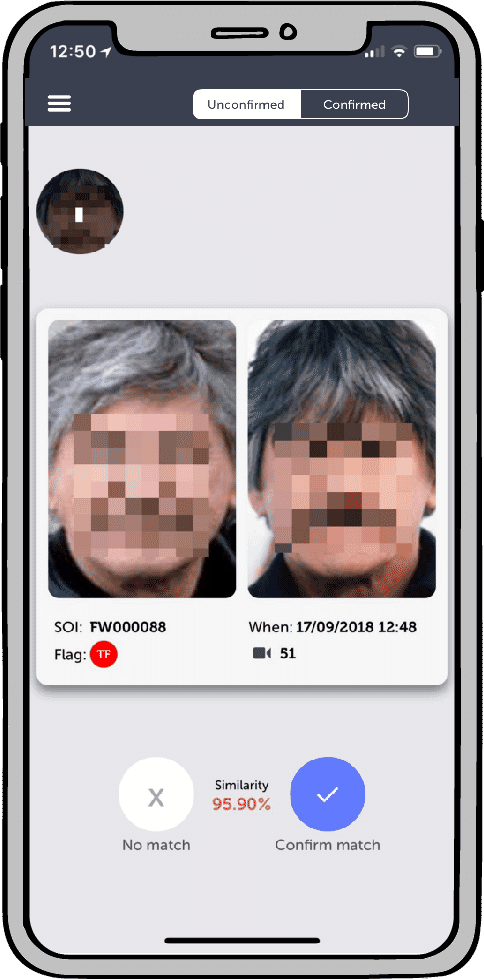
The technology is deployed to identify prolific offenders that have been enrolled on their watchlist in real time. This alerts in-store staff and/or a remote security operations centre to their presence. These instant alerts equip teams with vital information on the most appropriate course of action – i.e. whether that means proactively engaging the individual with exceptional customer service or requesting law enforcement assistance. Live facial recognition technology also provides valuable intelligence to help enforce trespass notices and store bans against repeat offenders and prolific thieves.
But the promise comes with real risk.
Unlike other video analytics use cases, or indeed other use cases for facial recognition such as staff access control or retrospective investigations, there is a perception and fear that live facial recognition might affect every shopper who walks through the door.
Early deployments of live facial recognition raised concerns about accuracy, and false positives (identifying the wrong person as a match) appeared to be particularly pronounced along the lines of ethnicity and gender. Not surprisingly this resulted in civil liberties campaigners, including Big Brother Watch, raising serious concerns about bias baked into the algorithms. And when things go wrong, they go wrong publicly: in 2024, a Home Bargains customer was wrongfully identified and banned from a store, generating unwelcome media coverage and eroding the trust that retailers need to make this technology work.
Previous working groups reported on what retailers report from live facial recognition deployments.
Retailers are no strangers to controversy when introducing new technologies. Over the last couple of decades, CCTV attracted “Big Brother” headlines, Electronic Article Surveillance embarrassed innocent shoppers with false alarms, and RFID was branded “the Devil’s numbering system.”
Live facial recognition will attract more controversy too. The question is not whether it will, but whether the industry can get ahead of it. At a time of rapid technological development, retailers should look beyond simply meeting today’s regulatory thresholds. The real objective should be to future-proof systems so they remain safe, ethical, fair and effective as expectations, standards and legislation evolve.
Adoption remains low despite strong results. But the barriers are not primarily technical. Retailers lack a shared framework for responsible deployment: clear rules on watchlists, transparency, bias monitoring and governance that can satisfy regulators, reassure customers, and give boards the confidence to approve pilots at scale.
Why the retail sector needs shared guidelines for facial recognition
The case for industry-wide facial recognition guidelines rests on three practical needs.
First, customer trust. Shoppers broadly accept security measures, but there is a narrow margin between protection and intrusion. Clear, visible standards help retailers stay on the right side of that line.
Second, consistency. Without shared boundaries, individual retailers risk applying facial recognition unevenly: over-monitoring staff, profiling customers unfairly, or responding to alerts in ways that cause harm. Agreed principles set a baseline that protects people and reduces legal exposure.
Third, confidence for decision-makers. Boards, regulators and privacy commissioners need to see that the sector takes governance seriously. A credible set of principles, developed collaboratively and refined through practice, makes it easier for retailers to move from pilot to scaled deployment.
The fragmented legal landscape reinforces the urgency too. Retailers operating across borders face a patchwork of rules that is tightening fast.
In the EU, the AI Act classifies real-time biometric identification in publicly accessible spaces as high-risk, with full enforcement from August 2026 and fines of up to 7% of global turnover.
In the UK, facial recognition in retail currently falls under the UK GDPR and the Data Protection Act 2018, with the ICO treating it as a regulatory priority and the Home Office consulting on a new legal framework for biometrics (which currently focuses primarily on law enforcement use but with retail within the sights of the government).
In Australia, the Privacy Commissioner ruled against both Kmart and Bunnings for deploying facial recognition without adequate consent or proportionality. Earlier this year, Bunnings successfully appealed part of the ruling against them but the legislative landscape remains unclear in Australia.
And in the United States, Illinois’ Biometric Information Privacy Act has generated billions of dollars in class action settlements, with Texas and a growing number of other states introducing their own biometric privacy requirements.
The twelve principles below do not replace national or regional law. They are designed to sit alongside it. They represent the core standards for the ethical and responsible use of live facial recognition in a retail environment, and we believe they are likely to be reflected in future regulation.
While the journey to adopting live facial recognition can take time due to the need to ensure that policies and procedures are relevant and adequate, one of the most encouraging themes we have heard from retailers adopting it is that the process has prompted a wider review of outdated policies and procedures, enabling them to be refreshed in line with contemporary knowledge and best practice. Seen in this light, the principles below provide not only a framework for live facial recognition, but also an opportunity to strengthen related policies and operational practices more broadly.
In some jurisdictions the law is well established; in others it is still being written. But what every market has in common is that regulators expect retailers to demonstrate proportionality, transparency and robust governance whenever they process biometric data. These principles provide a practical starting point for meeting that standard, wherever you operate.
How these principles were developed
The twelve principles below emerged from the ECR Retail Loss facial recognition working group, where retailers shared their experiences of piloting and deploying live facial recognition. The group reviewed what works, what fails, and where the governance gaps are.
The principles draw on existing UK guidelines for CCTV use and adapt them to the specific challenges of live biometric identification.
They are a starting point that retailers can use to shape their own trials and contribute to an evolving industry standard.
We welcome feedback. If you are deploying or considering live facial recognition, these principles are designed to be tested, challenged and refined. Indeed, we have been looking at the use of video and video analytics in retail for many years.
The Twelve Principles
1. Establish a legitimate and specific purpose
Deploy live facial recognition only when there is a clearly defined, specific and lawful purpose. Economic harm alone, such as lost profits from theft, does not justify its use. The prevention of serious and repeat retail crime, including violence and abuse against store teams, does.
Retailers should clearly define the specific purpose (for example, serious repeat offending), support it with data on the scale and seriousness of the problem, document why facial recognition addresses that problem in ways that existing technologies cannot, and secure formal approval from senior leadership including the CEO or board.
2. Demonstrate proportionality through impact assessment
Conduct a formal, documented data protection impact assessment before any deployment. This should assess how live facial recognition affects customers, staff and the wider public, consider whether certain groups (such as children) should be excluded, demonstrate that less intrusive alternatives have been considered and rejected on evidenced grounds, and schedule regular reviews of whether continued use remains justified.
3. Communicate clearly with shoppers
Transparency builds trust. Display clear signage before customers enter the store explaining that facial recognition is in use. Use plain language to describe why, and signpost customers to further information on the company website. Consider using the store PA to reinforce static communications such as posters. Provide a straightforward route for questions or complaints. Review all public-facing information regularly and update it when the system or its purpose changes.
4. Assign clear accountability and governance
Name a senior individual who is accountable for every aspect of facial recognition use: system operation, watchlist management, alert handling and compliance. Define roles and responsibilities across the organisation and with third-party providers. Establish governance policies covering watchlists, alerts and system use. Ensure senior leadership receives regular oversight reports, particularly on complaints and escalations. Put a clear process in place for when things go wrong.
5. Build robust policies, procedures and training
Document policies governing every aspect of facial recognition operation. Develop standard operating procedures for handling alerts, including how staff should approach and interact with individuals who trigger a match. Train all staff involved so they understand both the system’s purpose and its limitations, including the risk of bias and the importance of human judgement. Ensure that training is refreshed and new joiners are on-board. Restrict operation to trained personnel only.
6. Minimise data collection and retention
Process only the data necessary for facial recognition to function. Do not retain biometric data from individuals who do not generate a verified alert. Define retention periods clearly, justify them in writing, put automated deletion processes in place, and monitor compliance regularly. The principle is simple: collect the minimum, keep it for the minimum time, and prove that you do.
7. Control access and ensure lawful disclosure
Restrict access to biometric data to authorised, trained personnel with a defined need. Review access permissions regularly and revoke them promptly when roles change. Log every instance of data access and disclosure. Where data is shared with third parties, including law enforcement, ensure that each disclosure is lawful, necessary, proportionate and documented.
8. Understand and monitor system performance and bias
Facial recognition systems vary in accuracy depending on the provider, the environment and the demographics of the population being scanned. Retailers must understand these limitations before deployment, not after a failure.
Require vendors to provide detailed accuracy and error-rate data. Monitor false match rates in live environments, not just in controlled tests. Assess system performance across different demographic groups and take documented corrective action when disparities emerge. Establish a threshold below which the system should be paused or recalibrated. Commission independent testing where possible, and publish performance summaries to build public confidence.
9. Secure biometric data against misuse and breach
Biometric data is among the most sensitive personal data a retailer can hold. It demands commensurate protection.
Apply strong technical safeguards: encryption, network segmentation, and robust authentication for anyone accessing the system. Maintain comprehensive audit logs that record who accessed what data and when. Develop and rehearse breach response procedures so the organisation can act within regulatory timescales. Conduct regular penetration testing and security reviews. Treat facial recognition infrastructure with the same rigour as payment card systems.
10. Maintain ongoing oversight, audit and review
Deployment is not a one-off decision. Retailers must review facial recognition use on a regular cycle to ensure continued legal compliance, ethical standards and operational effectiveness.
Conduct formal audits at least annually, covering system accuracy, governance compliance, complaint trends and watchlist integrity. Ensure audit findings lead to documented improvements with assigned owners and deadlines.
Where appropriate, make governance summaries available to regulators, privacy commissioners or other external stakeholders. Consider establishing an independent oversight panel that includes members from outside the loss prevention function.
11. Keep a human in the loop at all times
Facial recognition outputs are alerts, not decisions. No automated system should trigger a customer interaction, an exclusion or a report to law enforcement without human verification first.
Staff (whether in store or remote) should exercise judgement when an alert is received. Not every match warrants an intervention, and staff must have the confidence and authority to stand down when the context does not support action. Record and review all decisions, both where staff acted on alerts and where they chose not to. Use these records to refine training, improve alert thresholds and identify patterns that need management attention.
12. Govern watchlists with rigour and transparency
The watchlist is the foundation of any live facial recognition deployment. If it is inaccurate, out of date or poorly governed, the system will cause harm regardless of how well the technology performs.
Define clear, documented criteria for inclusion on a watchlist, tied to the specific purpose established under Principle 1. Require every addition to be authorised by a named individual and recorded with a justification. Set review dates for every entry and enforce them. Remove individuals promptly when the grounds for inclusion no longer apply. Provide a clear process for individuals to request their removal from a watchlist and respond within a defined timescale.
What happens next
These twelve principles give retailers a governance foundation for deploying facial recognition in a way that protects customers, supports staff, satisfies regulators and preserves brand reputation. The retailers who reviewed them through the ECR Retail Loss working group broadly endorsed the framework and recognised that practical refinement will come through real-world application.
If you are piloting or planning a live facial recognition deployment, we want to hear from you. Share your experience, test these principles against your own operations, and help us build a framework the whole sector can use with confidence.
For more on how retailers are using video technologies to reduce losses and improve safety, explore the Video in Retail hub, our research on retail CCTV strategy, the latest video analytics survey, or listen to our podcast episode on facial recognition in retail: results within guardrails.





