

How to reduce returns fraud and abuse: 5 controls that work
Returns fraud and abuse is a repeatability problem, not a “bad customers” problem
Most retailers already know returns are costly. What’s harder to accept is this: when returns fraud and abuse works, it tends to get repeated. Which begs the question – how to reduce returns fraud and abuse?
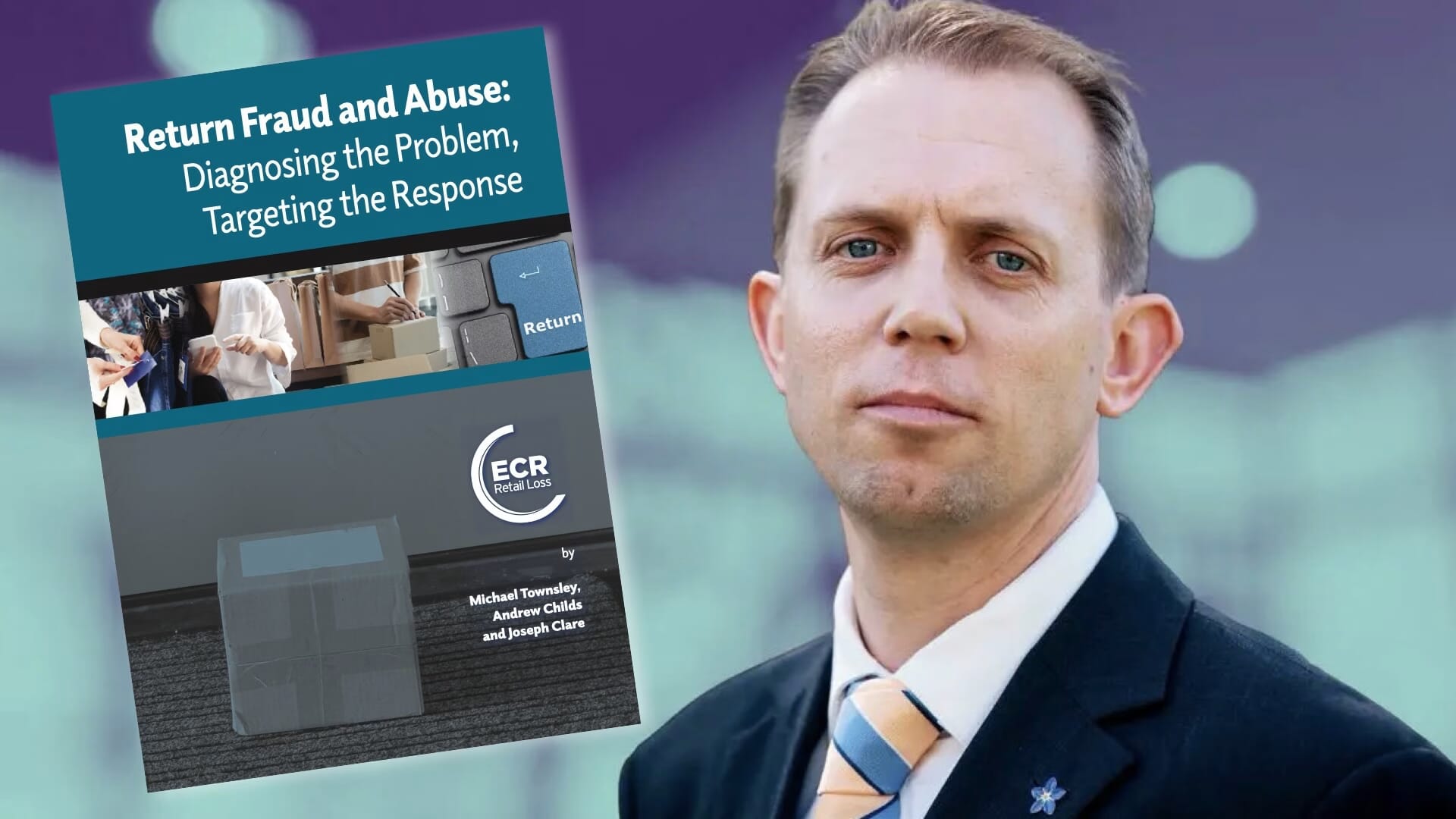
New research commissioned by ECR Retail Loss suggests returns fraud and abuse is not a one-off mistake for many offenders. In a large study (5,900 shoppers across the U.S., U.K., Canada and Australia), around seven in ten people who admitted problematic returns said they would “definitely” or “maybe” do it again after a successful attempt.
That’s the repeatability problem in plain terms: if the system rewards the behaviour, the behaviour is likely to continue.
The same research also brings a useful corrective: this is not a mass-customer issue. 83% of respondents reported no engagement in problematic returns at all.
So the practical question for loss prevention isn’t “how do we clamp down on returns?” It’s “how do we stop our own process from training a small minority that returns fraud and abuse is easy, low-risk, and worth repeating?”
Why returns fraud and abuse repeats
The study’s headline is not just that returns fraud and abuse exist. It’s that successful attempts tend to reinforce the behaviour.
Two details matter for LP teams:
- Nearly 90% of respondents who admitted problematic returns said they experienced no difficulty completing the process. In other words, the process often confirms to the offender that the retailer won’t challenge it.
- The intention to repeat is high: around 70% said they would do it again.
This matters because it changes what “good control” looks like. If returns fraud and abuse is repeatable, then the goal is not just to catch a few incidents. The goal is to remove the “easy win” feedback loop.
In practice, that tends to mean targeted, consistent friction in the right places — not blanket restrictions that punish compliant customers.
Returns fraud and abuse are not the same thing
One of the most useful parts of the report is its insistence on separating two behaviours that often get bundled together:
- Returns abuse is opportunistic exploitation of policy. Think wardrobing, excessive bracketing, or manipulating goodwill without a clear “factual lie”. It’s often rationalised by customers as normal behaviour.
- Returns fraud is deliberate deception intended to secure a financial or material gain. Think “did not arrive” claims, switch-item returns, fake tracking IDs, empty box returns and receipt-based scams.
This distinction is not academic. It’s operational.
If you treat returns fraud and abuse as one single problem, you tend to end up with one single response:
- Either you add broad friction that irritates honest customers and pushes cost into service,
- Or you keep the process “smooth” and accept that organised actors (and determined amateurs) will keep repeating what works.
Better is a split approach: proportionate, transparent friction for abuse; and a more investigative, evidence-led track for fraud.
What the research says about prevalence and concentration
The report’s survey data gives loss prevention teams a useful baseline picture:
- 83% reported no problematic returns behaviour.
- 15% admitted one type of problematic returns behaviour.
- A much smaller group disclosed multiple behaviours, which is a strong signal of motivation and persistence.
It also shows that different behaviours have different participation rates. For example, wardrobing sits higher than more complex tactics like fake tracking ID (FTID).
The LP takeaway is the same as in many other crime problems: the activity is not evenly distributed. Most customers are not the issue. A small group drives disproportionate harm.
That concentration is good news if you’re willing to act on it. It means targeted controls can outperform blunt policy changes.
How offenders learn and why they target certain retailers
Another practical point: returns fraud and abuse isn’t only “organised gangs”. The report found many behaviours are learned through personal experience (trial and error) and via friends and family for simpler tactics, while more complex frauds are often learned online via forums, messaging services and short-form video platforms.
It also found retailer choice often comes down to perceived leniency and familiarity with store policies. If offenders believe your returns process is easy, the process becomes a magnet.
This is where the slightly sceptical LP view helps:
- Policies don’t just describe what you allow.
- In practice, policies teach people what they can get away with.
The three enablers to build first
The report is blunt about a common failure mode: retailers try to fix returns fraud and abuse with “a policy tweak” or a single tool. Meanwhile, the real causes are organisational.
It identifies three cross-cutting enablers that make almost any prevention strategy more likely to work:
1) Aligned incentives and governance
If speed and “first-contact resolution” dominate, review quality tends to lose. The report recommends measuring service and risk side by side, treating success as meeting both sets of targets.
Practical LP prompt: where do your returns KPIs quietly reward “get it done” over “get it right”?
2) Joined-up data from purchase to refund
Retailers often have the signals they need, but scattered across order systems, payments, fulfilment, customer service, returns portals, and dispute/chargeback tooling. The report argues for stitching these together using stable identifiers and creating a single “order ledger” view.
Practical LP prompt: Can you see one end-to-end record for an order that includes purchase, delivery proof, returns authorisation, refund decision, and any follow-on dispute?
Previously we have reviewed Zalando’s returns strategy – they treat returns not as an unavoidable cost, but as a data opportunity
3) Frontline teams equipped and backed
Frontline teams are a control. But only if they’re supported to act consistently and safely.
The report calls for decision aids, evidence capture thresholds (ID/original tender match, serial/SKU checks, condition photos), second-person review where it matters, and fair investigations of overrides.
Practical LP prompt: are your colleagues confident they’ll be backed when they pause a return that “doesn’t feel right”?
Playbook 1: returns abuse (proportionate, transparent friction)
For returns abuse, the goal is to deter repeat opportunism without harming the compliant majority.
The report’s menu of tactics includes:
- Risk-tiered return fees or credits and shorter windows for high-risk categories; clearer “not returnable if used/tampered” rules.
- Adaptive friction triggered by patterns (high return frequency, specific SKUs), with automatic waivers for low-risk customers/items.
- Behavioural nudges at purchase/return that reduce casual misuse without penalising good customers.
A useful LP framing: you’re not trying to “win an argument” about whether wardrobing is morally acceptable. You’re trying to stop your operation subsidising it.
Playbook 2: returns fraud (deliberate deception; investigative track)
For returns fraud and abuse that crosses into deliberate deception, you need stronger verification and clear consequences.
The report’s fraud menu includes:
- Stronger verification for high-risk returns (no receipt, alternate tender, high value): receipt/original tender/ID alignment; serial/RFID checks where feasible.
- Risk scoring across channels to route transactions for second-person review and targeted investigator contact for the top risk bands.
- Escalating sanctions for repeat deception: warnings, restrictions/account flags, and ultimately bans, with clear criteria and review.
There’s also a simple human truth embedded in the survey findings: people rate direct, individualised consequences (fees; investigator contact) as more effective deterrents than general “please don’t do this” messaging.
A concrete example: wardrobing as a scripted behaviour
One reason returns fraud and abuse repeats is that it becomes scripted. The report uses crime scripting to map step-by-step actions offenders take and where interventions can disrupt them.
In the wardrobing vignette, the “bad actor” often:
- Chooses the most lenient policy
- Builds a “good customer” profile with small purchases
- Returns during busy periods to reduce scrutiny
- Uses social engineering to pressure agents
- Threatens chargebacks if refused
That’s uncomfortable reading, but it’s useful. It tells you where to intervene:
- Policy clarity and eligibility criteria (so “grey” stays less grey)
- Second-person review on defined thresholds
- Evidence capture at the right moments
- Support for colleagues facing social engineering
How to reduce returns fraud and abuse: a practical 30–60–90 day plan
If you’re trying to reduce returns fraud and abuse without setting fire to customer experience, here’s a pragmatic sequence aligned to the report’s logic.
Next 30 days: define, baseline, and stop flying blind
- Agree internal definitions for returns fraud and abuse (don’t let everything become “fraud”).
- Baseline the end-to-end returns journey and identify where “no friction” currently exists for high-risk scenarios.
- List the top 5 “exceptions” colleagues are allowed to make, and whether they’re governed, audited, and time-limited (or quietly permanent).
Next 60 days: build the minimum viable joined-up view
- Create a single view that links order, delivery, return authorisation, refund decision, and dispute/chargeback outcome.
- Start simple risk-tiering rules (value thresholds, no receipt, alternate tender, repeated patterns) to route for second-person review.
- Make evidence capture non-negotiable on defined thresholds (photos, serial/SKU where appropriate, ID/original tender match).
Next 90 days: harden repeatability points
- Introduce proportionate friction for abuse patterns (risk-tiered fees/credits, window adjustments, adaptive waivers).
- Implement the investigative track for fraud (verification, risk routing, investigator contact for top bands).
- Codify consequences for repeat deception and ensure decisions are recorded and reviewable.
- Train for social engineering: give colleagues scripts and escalation paths so “being nice” doesn’t equal “being played”.
FAQs
Isn’t tightening returns just going to annoy good customers?
Yes, if you apply it blindly. The research argues the opposite approach: keep low-risk journeys fast, and put targeted friction where patterns justify it. The whole point is to avoid punishing the 83% who aren’t the problem.
What’s the simplest signal that returns fraud and abuse is repeating?
Repeat patterns with “no difficulty” outcomes. If offenders succeed easily and face no friction, the system is teaching them to repeat.
Where should LP start if data is fragmented?
Start by agreeing on identifiers and building the “single order ledger” concept: one auditable record from purchase to outcome.
Why involve customer service leadership?
Because misaligned KPIs are a root cause. If service is rewarded for speed and approvals, while LP is rewarded for reducing fraud, returns fraud and abuse becomes a predictable by-product.
Read the full report
Return Fraud and Abuse: Diagnosing the Problem, Targeting the Response is available via ECR Retail Loss.